Hosting a Halloween dinner for four to eight people is one of the nicest ways to spend the holiday. You skip the crowded party, the table gets to be the main event, and everyone leaves with a memory instead of a headache. It also comes with one problem that regular dinner parties do not have: the doorbell keeps ringing.
This guide covers Halloween dinner party table ideas for a small crowd, both a simple setup and a fully layered one, plus a plan for timing dinner around trick-or-treaters so the soup does not go cold.
Decide the timing before the table
Halloween falls on a Saturday this year, and in most neighbourhoods trick-or-treating peaks between about 5:30 and 7:30 p.m. You have three realistic options:
- Early dinner, before the rush. Sit down around 4:30 and be finished by 5:45. Guests can stay on to help hand out candy, which many people enjoy.
- Late dinner, after the rush. Greet kids with a bowl until about 7:30, then serve at 8:00. Appetizers and drinks fill the gap, and the table is set early so it is part of the evening’s atmosphere.
- Dinner with door duty built in. Choose a first course that holds well, like soup in a pot or a platter. One person answers the door each time, in rotation, and the main course waits.
The late option is the most popular for adults, and it gives your table a beautiful moment: the candles come on at dusk and the house changes while the doorbell is quiet.
The Less table: calm, dark, easy to set
A simple Halloween table works best when it has one idea and plenty of room. Think of it as a regular dinner with a shadow cast over it.
- Start with a plain base. A dark tablecloth or runner, or just the bare wood if the table is good. Black, charcoal, deep green or burnt orange all work.
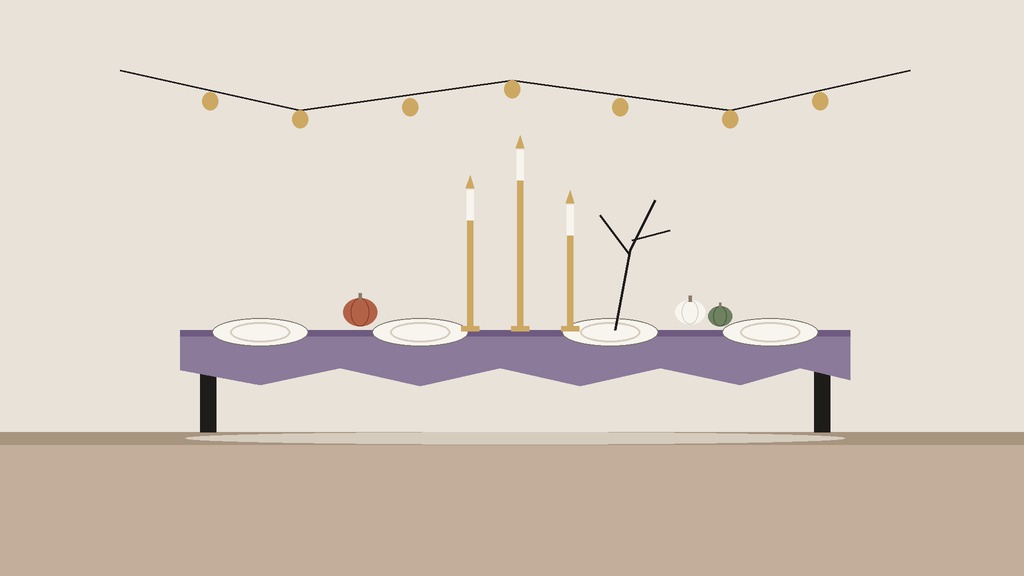
- One centrepiece. A row of small pumpkins down the middle, a few bare branches in a tall vase, or three candlesticks of different heights. Keep it low enough that guests can see each other.
- Simple place settings. White or dark plates, a cloth napkin and one small accent: a sprig of rosemary, a paper bat on the napkin, or a name card on a mini pumpkin.
- Warm light only. Candles on the table and a lamp in the corner. If you can, turn the overhead light off.
- One surprise. A small thing at each seat, like a handwritten fortune or a short ghost story to read after dessert.
That is the whole setup. It takes about thirty minutes, costs very little, and leaves you free to cook.
The More table: layers and theatre
If you love setting a table, Halloween is your chance to go big. A More table is full, textured and a little theatrical, but it follows a plan.
- Layer the base. A dark tablecloth, a lace or gauze runner over it, and a few scraps of velvet or burlap along the centre.
- Build the centre in three heights. Tall candelabra or branches, mid-height pumpkins or books, and low candles and small bottles. Leave gaps between groups so there is room for serving dishes.
- Mix the tableware. Pair dark plates with an antique platter, odd glasses, a brass or silver mug. Slightly mismatched pieces look collected rather than bought.
- Play with place settings. A small sprig tucked into the napkin fold, a vintage key on each plate, or a name written on a leaf with a gold pen.
- Add a sensory touch. A drink served in glass bottles with handwritten labels, a bowl of dried orange peel and cinnamon sticks, or a quiet playlist of old jazz or soundtrack-style instrumentals.
For the broader look at layering a dark room, see our maximalist Halloween decor ideas, which uses the same palette and light rules.
Table math for a small crowd
A table that feels full with six may feel empty with four. A few quick numbers help:
- Allow about 60 centimetres of table width per person. Under that, elbows touch. Over 75 and a small group feels spread out.
- Leave the middle clear for food. If you serve family-style, a centrepiece should leave space for two or three dishes.
- Keep the centrepiece under 30 centimetres if guests sit across from each other, or use a tall piece with a slim base.
- Set your drinks and water on a side table. The surface in front of each guest stays clear for the plate.
A sample timeline for a late dinner for six
This is the schedule that works well for a Saturday Halloween with trick-or-treaters before dinner. Adjust the times to match when kids start showing up on your street.
- 3:30 p.m.: Set the table, light nothing yet, and put the soup on low or the squash in the oven.
- 5:00 p.m.: Fill the candy bowl and test the porch light. Put out the first plate of snacks for guests as they arrive.
- 5:30 to 7:30 p.m.: Door duty in rotation. Anyone who answers the door gets first pick of the leftover candy at the end of the night.
- 7:30 p.m.: Turn off the porch light, light the table candles and pour drinks.
- 8:00 p.m.: Sit down to soup and bread, then the main course, with dessert near 9:30.
Notice how little cooking happens after the door opens. That is the whole secret: dishes that can sit for an hour without losing anything.
Food that suits the table
You do not need a themed menu. A few ideas fit the table and the weather:
- A big soup in a pot or a hollowed pumpkin, served with bread, which suits the early or the late dinner.
- A cheese and fruit board with dark grapes, figs and nuts, which looks atmospheric with no cooking.
- Roast squash or root vegetables on a long platter.
- A dessert that can wait, such as baked apples or dark chocolate pots, so dessert happens when the door is quiet.
Keep the menu short. Two courses and a dessert is plenty for a small crowd, and you will actually sit down.
Less or More: your table at a glance
| Less | More | |
|---|---|---|
| Palette | Dark base, one accent colour | Layered darks plus gold, plum or rust |
| Centrepiece | One row of pumpkins or one branch arrangement | Three heights, with candles and objects |
| Tableware | Plain plates and cloth napkins | Mixed plates, vintage pieces, extras |
| Setup time | About 30 minutes | Two to three hours |
| Host stress | Low | Medium, if you plan the order |
| Watch out for | Feeling too plain | A table too crowded to pass the salt |
When to stop
For Less, stop when you can see every guest’s face over the table without moving a candle. For More, stop when you can still pass a dish across the table without lifting anything out of the way. Those two tests catch almost every problem.
The payoff of this dinner, in either version, is a night that has a shape: a quiet golden hour before the doorbell, a bright and noisy middle, and a long, candlelit meal when the kids have gone home. A Halloween table does not need much to make that feel special.
One safety note for any version: keep candles and hot dishes out of reach of small guests and pets, never leave a burning candle in an empty room, and refrigerate food that has been out for more than two hours.
Handle the door without stress
If you are hosting and handing out candy, the evening goes better with a plan. The Trick-or-Treat Night Prep Kit from Green Velvet is a printable with parent going-out prep, a door candy planner and door-bowl notes, which covers the candy side of the evening while you plan the dinner.
For more ideas about hosting without burnout, see the Less or More? hub and our post on the Thanksgiving table done two ways, which uses the same layers in a warmer palette. Planning the front step as well? Start with minimalist Halloween decor ideas.
Free checklist: Less or More?
Not sure which lane fits your room or closet? Our free 2-page printable walks you through a one-hour room reset and a weekend closet sort, with a Less column, a More column and a stop rule for each. We will email it to you, free.


Leave a Reply