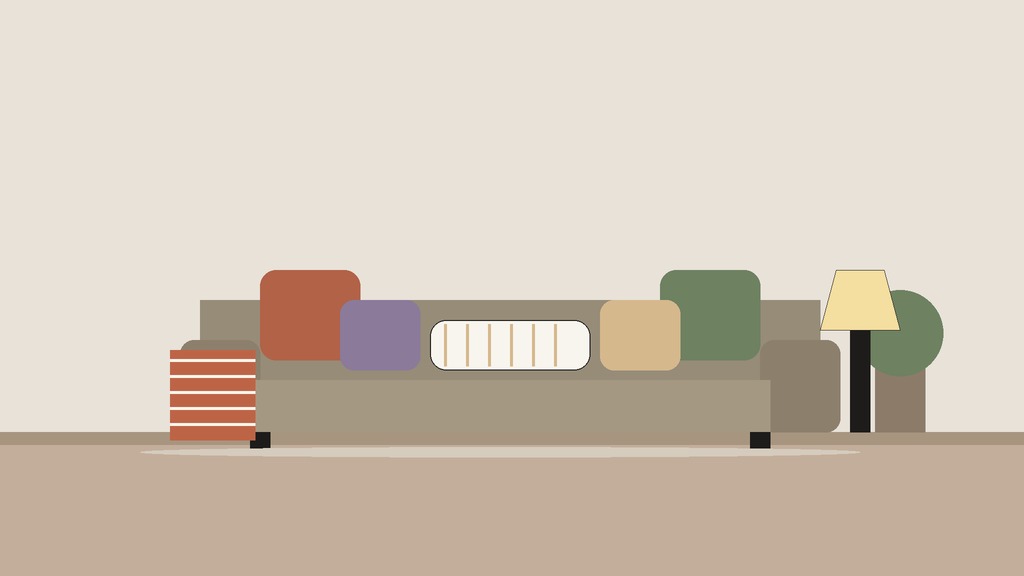
A sofa with six matching pillows lined up like soldiers does not look warm. It looks like a showroom. The rooms people want to sit in have a different logic: a pile of cushions that vary in size, a throw that looks like someone just used it, and a mix of fabrics that are pleasant to touch. This guide explains how to layer throw pillows and blankets for fall, with specific sizes, combinations and arrangements, so the result looks collected rather than accidental.
Everything here works with what you already own, plus one or two additions if you want them.
Why layering works
Soft furnishings do three jobs at once. They add comfort, they bring colour and pattern into a room without paint, and they let you change a room for a season without changing the furniture. In fall, texture is the useful part: a wool throw, a corduroy cushion and a linen cover look different under lamplight from how they look in summer daylight.
The method below has four ingredients: a base, a main accent, a contrast and a texture. Follow them in that order.
Step one: choose a palette first
Pick three colours before you pick a single pillow.
- A base colour, usually a neutral that matches the sofa or bed. Oatmeal, grey, charcoal, cream or tan.
- A main colour, such as rust, olive, mustard or deep plum, used in the largest accent pieces.
- A contrast colour, used in one or two small touches. Think of a dark teal against rust, or a cream against plum.
If you are not sure, take a photo of the room and a fabric swatch or pillow, and compare them on your phone. The photo shows undertones that you do not notice standing in the room.
Step two: choose sizes
A well-layered sofa uses at least three pillow sizes, because identical squares read as a set.
- Large squares, about 55 to 60 centimetres, go at the back or the corners of a sofa. They give structure.
- Medium squares, about 45 to 50 centimetres, sit in front of the large ones.
- A lumbar pillow, about 30 by 50 centimetres, goes in the centre or in an armchair. It breaks up the squares.
- A small round or bolster pillow is an optional accent for the end of a sofa or a chair.
Buy inserts that are slightly larger than the covers, by about 2 to 5 centimetres. A stuffed cover looks fuller and holds its shape, while an under-filled one sags in the middle.
Step three: choose textures and patterns
Fall pairs well with fabrics that feel heavy and warm. Combine at least three.
- Knit or chunky wool for a visible texture.
- Velvet or corduroy for a soft, rich surface that catches light.
- Linen or cotton for a relaxed, matte surface that rests the eye.
- Faux fur or shearling as a single accent, since a little goes a long way.
- A pattern such as stripe, plaid, check or a simple geometric.
If you use more than one pattern, vary the scale. A wide stripe, a small check and a large floral can sit together, while three medium-sized stripes will fight each other. Keep at least one pillow plain for every patterned one.
Step four: arrange them
A simple recipe for a three-seat sofa:
- Corners first. Put one large square in each corner, angled in slightly.
- Add a medium pillow in front of each large one, in a contrasting texture.
- Place a lumbar in the centre or against one arm, in your contrast colour.
- Leave the middle seat clear, so a person can still sit.
- Step back and look from the doorway. Swap anything that disappears into the sofa.
An armchair usually takes one or two pillows. A bed takes more, with a different recipe below.
Layering blankets on a sofa
A throw is the final layer, and it works best when it looks like it was used.
- Drape one over the arm of the sofa, folded once lengthwise, with one end hanging down.
- Roll or fold one and place it on the back of the sofa, so a person can reach it.
- Keep a basket of two or three extra blankets near the seat for guests.
- Choose a size that fits. A throw of about 125 by 150 centimetres suits one person. A bigger blanket works better for two.
- Vary the weight. A light knit for the evening, a heavier wool for the coldest nights.
Layering a bed
The bed is where fall layering shows. Build from the sheets up.
- Sheets and a duvet or comforter in your base colour.
- A second blanket or quilt, folded in thirds across the bottom third of the bed.
- A chunky throw folded again over the quilt, or draped on one side.
- Sleeping pillows, in plain cases, at the head.
- Two or three accent pillows in front, with a lumbar or small square at the centre.
If the bed looks too heavy, take away one accent pillow. If it looks flat, add texture, not more colour.
Layering a reading chair
A chair and a side table makes a small space that works every evening.
- A lumbar pillow against the back for support.
- A throw over one arm, ready to pull over your knees.
- A small stool or pouf covered with a blanket for your feet.
- A lamp that lights the page without shining in your eyes.
Keep it safe
Soft furnishings are comfortable, and they come with a few safety rules.
- Keep blankets and cushions away from heaters, candles, fireplaces and stoves. Fabric can catch fire, so follow the heater maker’s instructions on clearance.
- Never place pillows or blankets in an infant’s crib or sleep space. Safe sleep guidance for babies calls for a firm, flat surface with nothing else on it.
- Use a fireplace screen and keep soft furnishings well back from any open fire.
- Secure rugs and throws on stairs and floors, so no one trips.
- Check labels. Some covers must be washed separately or dry cleaned.
Mistakes that make a sofa look off
A short list of habits causes most of the problems people notice.
- Everything is the same size. Three identical squares look like a set from a store. Mix at least three sizes.
- Everything is the same texture. A sofa full of smooth cotton looks flat under lamplight. Add one rough and one soft surface.
- The pillows are too small for the sofa. Tiny cushions on a large sofa look lost. Go up a size.
- The colours are all equally loud. Let one colour lead and the others support it.
- There is no room to sit. If a guest has to move six pillows, the arrangement is for photographs, not people.
- The throw is folded too neatly. A throw that looks slightly slept in invites someone to use it.
Care and storage
Fall fabrics need a little maintenance.
- Wash covers before you use them, following the label. Cold water and a gentle cycle protect colour and texture.
- Air out blankets on a dry day. Shake them, and let them hang for an hour.
- Vacuum cushions with a soft brush to lift dust and pet hair.
- Rotate pillows so they wear evenly.
- Store spare cushions in a breathable bag or a basket, and not in plastic, which traps moisture.
Less or More: the textile plan
| Less | More | |
|---|---|---|
| Pillows per sofa | Two or three | Five or six, in three sizes |
| Blankets | One throw | A basket plus a draped throw |
| Colours | Two | Three, plus a contrast |
| Patterns | One | Two, at different scales |
| Time | Ten minutes | An hour of editing |
A fixed order to follow
If you like to have a fixed order for building a room, the Maximalist Home Styling Playbook from Green Velvet has a layer tracker and a pattern mix worksheet, and it ends with stop rules so a full room does not tip into a crowded one.
When it is enough
The test is simple: can a person sit down in each seat without moving anything more than a throw? If so, you are done. To see more of the full, layered look, visit the Maximalism hub. You might also like our guide to making a home warm as the evenings get darker, daylight saving time ends: how to make your home cozy, our cozy maximalist fall decor ideas and our fall bedroom guide, Less or More.
Free checklist: Less or More?
Not sure which lane fits your room or closet? Our free 2-page printable walks you through a one-hour room reset and a weekend closet sort, with a Less column, a More column and a stop rule for each. We will email it to you, free.


Leave a Reply