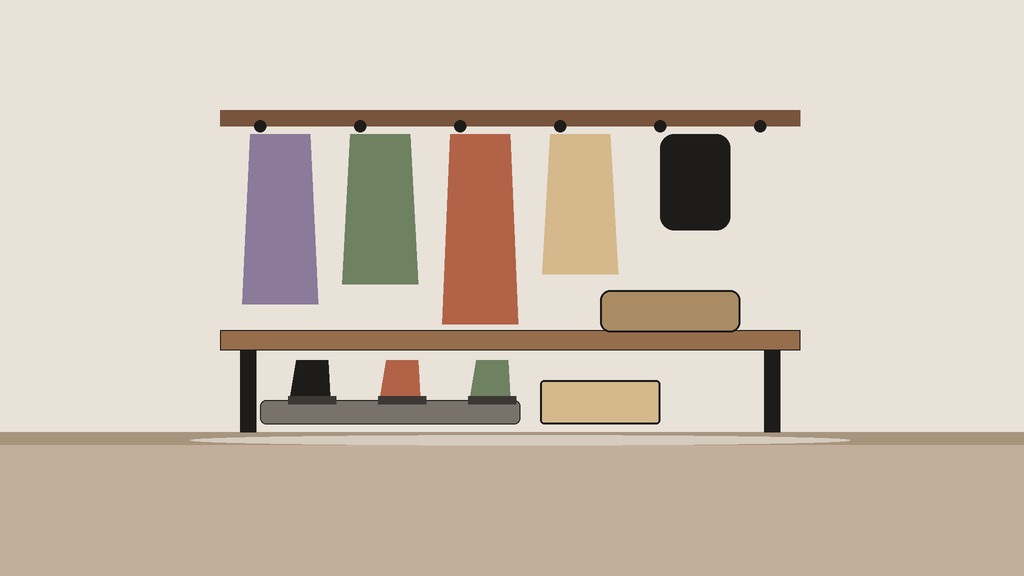
By the first week of November, the entry of many Canadian homes is doing too much. It holds wet boots, a growing stack of coats, mittens that have lost their partners, a few bags, the mail and, for a short stretch of the year, a thin layer of road salt. A mudroom fixes this, and so does a much smaller version of one. Here are mudroom organization ideas at two sizes: a simple set of hooks for a narrow entry, and a full drop zone for a home with space and a busy family.
Neither version needs a renovation. Both are built from hooks, a tray, a bench or shelf and a few containers.
What a mudroom actually has to do
Before buying anything, look at what the space handles in a normal week.
- It catches things as you come in: coats, bags, keys, boots, mail and wet gear.
- It lets things dry between uses, which in a wet November or a snowy January is the main job.
- It sends people out the door fully equipped, with hats, mitts, shoes and bags in the right place.
- It protects the rest of the house from mud, salt and water.
If a piece of furniture or a hook does not support one of these four jobs, it does not belong.
Count before you plan
Spend two minutes on a simple count. You will get a better result than any shopping trip.
- Number of people who use the entry.
- Pairs of shoes and boots in daily use, not the whole collection.
- Coats in current rotation, one or two per person.
- Bags, such as backpacks, work bags and reusable shopping bags.
- Seasonal extras: hats, mitts, scarves, helmets and umbrellas.
The number of hooks, the size of the boot tray and the capacity of the bins all follow from this count. If you only have two people, a bench and a bin may be too much.
The simple version: hooks, a tray and a basket
This is the version for a narrow hall, an apartment entry or a corner by the door. It costs very little and takes under an hour.
- Hooks: one per person for a coat, and one extra for a bag or a guest. Mount them at shoulder height for adults and within easy reach for children. Use screws into studs or proper anchors for the weight, or adhesive hooks rated well above the load if you rent.
- A boot tray: a waterproof tray with a raised edge, large enough for everyone’s daily boots. It catches salt and meltwater, and it wipes clean.
- A basket or bin: one for hats and mitts, labelled by person or season.
- A small shelf or dish for keys, so they never wander.
- A mat inside the door, to catch grit before it gets onto the floor.
That is the entire system. If a coat does not fit on a hook, it goes in the closet. If the basket is full, something comes out.
The full version: a drop zone
If you have more space, or more people, a larger system will save time every morning.
- A bench with space underneath for shoes, giving everyone a seat to put boots on. Check the weight rating, and anchor any tall pieces to the wall.
- Cubbies or lockers, one per person, with a hook above and a bin below. Everyone knows which one is theirs.
- A shelf above the hooks for out-of-season items or helmets.
- A mail and paper station: a small wall file or tray for the daily mail, school notices and anything that needs action.
- A charging shelf with a power strip for phones, with cords tucked out of the way.
- A wall calendar or whiteboard for the week’s schedule and a list of what to bring.
- A mirror by the door for a last check.
- A clear path to the exit, always.
Keep the layout in a line. If a person has to walk across the room to reach the hook, the system will not be used.
Handling wet and salty winters
In Canada, winter gear creates its own set of problems, and a mudroom is the right place to deal with them.
- Dry boots properly. Remove insoles if you can, and put boots near a gentle source of air, not directly on a heater, which can crack leather and glue. A boot tray with a rack lets air circulate.
- Dry mitts and hats on a rack or drying line, not on a radiator where they can overheat.
- Wipe salt off boots and floors regularly. For white salt stains, use a cleaner made for your flooring, follow its label and test a hidden spot first.
- Use a washable mat that you can shake out and wash.
- Keep an old towel for wet pets and wet wheels.
Kids and the entry
Children use the entry best when they can reach everything.
- Low hooks for coats and bags, and a bin they can open easily.
- A bench for putting on boots, with a rule that shoes go on here.
- A picture label for each person’s cubby.
- A “tomorrow” spot for anything that needs to go to school.
- A reset routine, where bags are emptied and gear returned when you get home.
Small entries and apartments
Many homes do not have a mudroom, and that is fine.
- Use the back of the door for an over-the-door rack with hooks, which also holds hats and bags.
- Choose a narrow shoe rack that tucks beside the door, or a shallow bench with a lid.
- Mount a rail or a slim shelf at eye level, with hooks below and a tray above for keys.
- Use a wall-mounted organizer to hold mail and sunglasses.
- Edit the coats. An apartment entry works with a few coats per person.
Our guide to the fall entryway, Less or More covers the decor side of the same space.
Where the guests’ coats go
A drop zone built for the household often fails the first time friends come over.
- Keep two or three empty hooks at the end of the row. They are the guest hooks, and they cost you nothing.
- Use the closet for visitors. Move a few of your own coats to the end of a rod, and leave a clear section for hangers.
- Put a small bench or chair near the door, so people can take off boots without hopping.
- Offer a spot for wet things, such as a tray for umbrellas, so puddles stay in one place.
- For a bigger gathering, place a rolling rack in the hall for the evening, and put it away afterwards.
Less or More: the mudroom plan
| Less | More | |
|---|---|---|
| Hooks | Four to six | A cubby per person |
| Boots | A tray by the door | A bench with shoe storage |
| Small items | One basket | A bin per person |
| A tray | A wall file and calendar | |
| Cost | A small outlay | A larger investment |
| Time | An hour | An afternoon |
A system to keep the entry running
An entry stays tidy when somebody checks it once a week. The Home Command Center: Weekly Reset and Household Binder from Green Velvet is a printable with a week-at-a-glance page, chores and a maintenance log, which gives that weekly check a place to live.
Safety checks for the entry
- Keep the exit clear. Nothing should block the door or the path to it.
- Anchor tall cubbies and shelves to the wall.
- Watch the floor. Wet boots, salt and loose mats cause falls, so use mats with a non-slip backing.
- Check hooks for loose screws, and do not overload them.
- Keep cords tucked away from the walkway.
How to know it is finished
You are done when every person can come in, hang a coat, put boots on the tray and put the keys in the dish without moving anything else. For more on simple home systems, visit the Minimalism hub. If you are working through the rest of the house, our fall closet, Less or More guide and our November declutter reset checklist can help you clear the closet next to the entry.
Free checklist: Less or More?
Not sure which lane fits your room or closet? Our free 2-page printable walks you through a one-hour room reset and a weekend closet sort, with a Less column, a More column and a stop rule for each. We will email it to you, free.


Leave a Reply