A potluck sounds like the easy way to host. Everyone brings something, nobody cooks everything and the table fills itself. Then six people bring dessert, two arrive with dishes that need an oven that is already full and the host is left with no vegetables and a cold casserole. A Friendsgiving that works has a little structure behind the friendliness.
A Friendsgiving can run as a simple sign-up or as a fuller hosted feast, and both fit a small apartment. Neither depends on a particular date, though Friendsgiving usually lands on a weekend in the weeks around American Thanksgiving, which is November 26 in 2026.
First, choose the style
Think about your space, your kitchen and your friends.
- The simple sign-up. You provide the main dish and a few supplies. Guests sign up for the sides, desserts and drinks. It suits a small group, a small kitchen and a casual mood.
- The full hosted feast. You cook the main and several sides, and guests bring a drink, a dessert or a small extra. It suits someone who enjoys cooking, with a space that seats everyone.
- A hybrid: you do the main and the table, and each guest brings one named dish from a short list.
If you are not sure, start with the simple sign-up and add a dish yourself if something is missing.
Build the sign-up
A sign-up sheet works if it has categories and numbers, and not a blank list.
- Decide how many guests and how many dishes you need. A good rule is about one dish per guest, with a few more than the number of people.
- Set the categories: main, starch, vegetable, salad, bread, dessert, drinks and extras such as ice or napkins.
- Set a limit for each: for example, two starches, three vegetables, two desserts and four drinks.
- Let the host take the main so the centre of the meal is certain.
- Share it online in a shared document or a group chat, where everyone can see what has been claimed.
- Ask each guest to add what the dish is, whether it needs reheating and whether it contains common allergens.
The extra column matters. A dish that needs an oven at 4:30 is a different problem from one that goes straight to the table.
Make an oven and outlet map
A traffic jam in the kitchen is a common way for a potluck to go wrong.
- Count your heat sources: an oven, a stovetop, a microwave, a slow cooker or two, a toaster oven.
- Ask what each dish needs and when. Cold dishes need fridge space and nothing else.
- Assign time slots. Two dishes can share the oven if they bake at the same temperature.
- Use slow cookers and warming trays for dishes that need to stay hot.
- Check your electrical setup. Do not overload an outlet or a power strip, and follow the manufacturer’s instructions for each appliance.
- Ask guests to arrive with food ready to serve, and to reheat only if you have agreed on a time.
Food safety for a shared table
A potluck keeps food out for longer than a normal dinner, so a few rules apply.
- Keep hot food hot. Health Canada advises keeping hot food at 60 degrees Celsius or warmer, using a slow cooker, a warming tray or a low oven.
- Keep cold food cold, at 4 degrees Celsius or below, with ice underneath where possible or by taking small portions out of the fridge in turns.
- Do not leave perishable food out for more than two hours. Put leftovers in the fridge within that time.
- Use clean serving utensils for each dish, and keep raw foods away from cooked ones.
- Label the dishes, especially those with nuts, dairy, gluten or eggs.
- Cook meat and poultry fully, and use a food thermometer.
- For children under four, cut food into small pieces and avoid whole nuts, whole grapes and hard raw vegetables, which are choking hazards.
The simple sign-up: a plan for eight guests
A sample list for a small group:
- You: a roasted turkey breast or a pot of chili, a pitcher of water and the table.
- Guest one and two: a starch each, such as mashed potatoes or a baked pasta.
- Guest three and four: a vegetable dish and a salad.
- Guest five: rolls and butter.
- Guest six and seven: a dessert each.
- Guest eight: drinks and ice.
That makes about nine dishes for eight people, with one oven and one microwave.
The full hosted feast
If you want to cook the main parts, plan like this.
- You cook: the main, two starches, two vegetables and gravy.
- Guests bring: a dessert each, a drink each, bread and a salad.
- Start with a smaller menu than you might for a family dinner, since friends will bring more food.
- Make ahead: cranberry sauce, desserts and anything that can be reheated.
- Plan the table: space for the serving dishes down the centre, and a side surface for the drinks.
Our Thanksgiving menu planning guide lays out the oven schedule and turkey safety guidance in detail, and it works for a Friendsgiving as well as a family dinner.
Setting up a small space
An apartment can handle a potluck with a few adjustments.
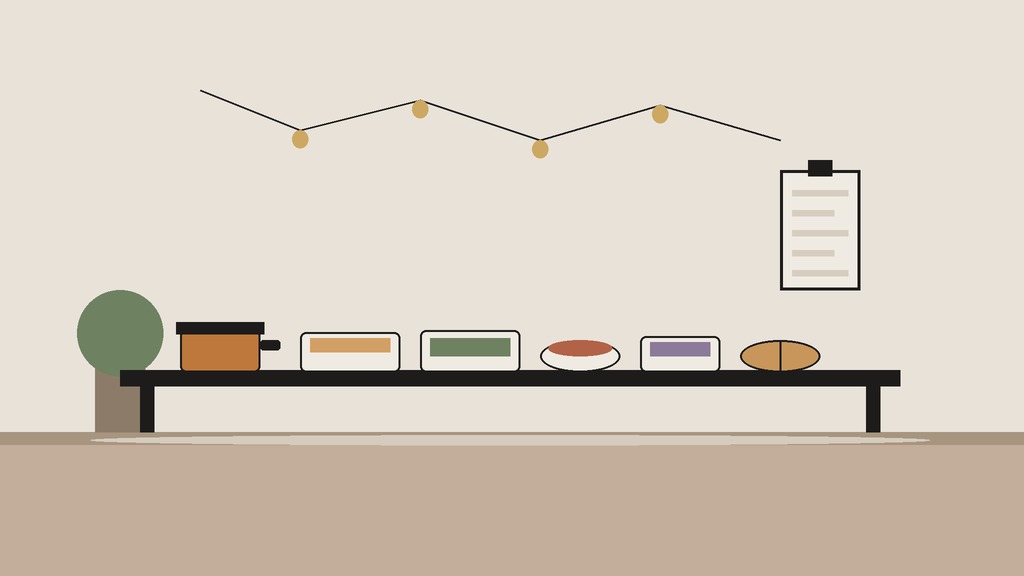
- Use a buffet line on a counter or a dresser, with plates at one end and cutlery at the other.
- Use a drinks station away from the food, so people do not queue in the same spot.
- Offer a mix of seats: a table, a sofa and floor cushions.
- Make a coat spot and a shoe spot near the door.
- Have extra cups and plates, since cups get put down and forgotten. Paper or compostable options work for a crowd.
- Put out a bin for compost and recycling, so cleanup is quick.
Things that go wrong, and how to avoid them
- Six desserts and no vegetables. Use categories and limits.
- A dish arrives late and cold. Ask guests to arrive with dishes ready to serve, and assign reheating times.
- Not enough serving utensils. Set out one spoon per dish ahead of time, and ask guests to bring their own for their dish.
- A guest with an allergy cannot eat anything. Ask in the invitation, and put labels on every dish.
- Too much food. Ask guests to bring containers, and plan to send leftovers home.
Leftovers, shared fairly
Plan for the end of the night.
- Ask guests to bring a container, or set aside some of your own.
- Pack leftovers promptly, within two hours of serving.
- Label containers with the dish and the date.
- Send people home with food so that you do not have a week of one dish.
Less or More: the Friendsgiving plan
| Less | More | |
|---|---|---|
| Host cooks | The main only | The main and several sides |
| Guests bring | Most of the food | A drink or dessert |
| Dishes | Around nine | A dozen or more |
| Prep | An afternoon | Two days |
| Risk | Gaps in the menu | A tired host |
Put the list in one place
A potluck is mostly lists: who is coming, what they are bringing and when things need the oven. The Thanksgiving Host Countdown and Table Plan from Green Velvet has a 16-row guest list and RSVP tracker, a menu planner and a leftovers and clean-up page, which suits a Friendsgiving as well as a family dinner.
Where to stop
Stop adding dishes when the oven map is full and every category on the sign-up has a name next to it. For more on hosting without stress, visit the Less or More? hub. To prepare the home, see our Thanksgiving cleaning schedule and our guest room checklist for Thanksgiving.
Free checklist: Less or More?
Not sure which lane fits your room or closet? Our free 2-page printable walks you through a one-hour room reset and a weekend closet sort, with a Less column, a More column and a stop rule for each. We will email it to you, free.


Leave a Reply