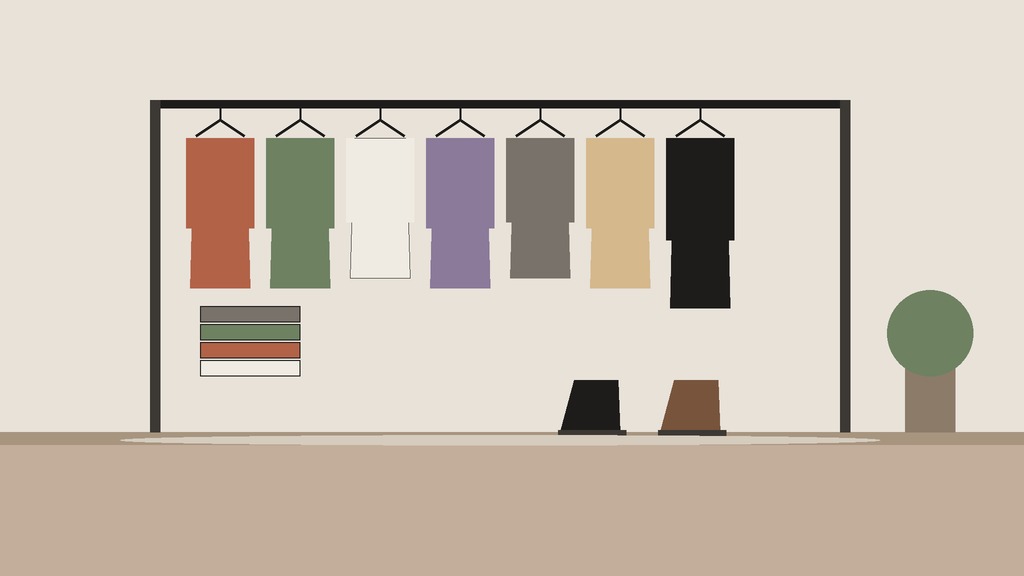
Twelve pieces sounds like a punishment until you do the arithmetic. Twelve garments that all go together make a lot of outfits, and a fall closet that works for a Canadian November, with wind, wet snow, heated offices and unheated bus stops, is a harder test than a closet that only has to look good. A capsule wardrobe answers it by choosing fewer, better, more compatible things.
The list below is a fall capsule wardrobe of 12 pieces, plus outerwear and accessories counted separately. It is built for cold weather, layering and low maintenance, with fewer things chosen carefully and worn often.
What a capsule is, and is not
A capsule wardrobe is a small set of clothes that all work together. It is not a uniform, a challenge to wear the same thing every day or a reason to buy twelve new items.
- Start with what you own. You may already have half of the pieces.
- Choose a palette, so that every top goes with every bottom.
- Prioritize fabrics that keep you warm and last: wool, thick cotton, denim and good knits.
- Count the outerwear separately, since a winter coat and boots are not interchangeable with a sweater.
- Be realistic about your life. A capsule for an office job looks different from one for outdoor work or for parenting.
Step one: choose three colours
A capsule works because everything matches. Choose three.
- A base neutral: charcoal, navy, black or dark brown, used for most bottoms and a coat.
- A light neutral: cream, oatmeal or grey, used for several tops and a sweater.
- An accent: rust, olive, plum or deep green, used for one or two pieces that add warmth.
If you already own a lot of one colour, build around that. A palette you already like is the one you will wear.
The twelve pieces
Here is a list of twelve garments for a cold fall.
Tops (four)
- A long-sleeve cotton tee in the light neutral.
- A second long-sleeve tee or a fine-knit top in the base neutral.
- A button-up shirt in a plain or subtly patterned fabric.
- A thermal base layer top, in wool or a synthetic blend, to wear under the others on the coldest days.
Knits and layers (three)
- A wool or wool-blend sweater in the light neutral.
- A second sweater, thicker or in the accent colour.
- A fleece or insulated mid-layer, for outdoor days.
Bottoms (three)
- Dark jeans that fit well.
- Wool or heavy-weight trousers in the base neutral.
- A second pair of trousers, casual or work, in a different colour.
One extra layer (two)
- A cardigan or overshirt, which works as a light jacket indoors.
- A dress or skirt in a warm fabric, with tights, if you wear them. If not, a third pair of trousers or a heavier knit.
That is twelve. Each top should work with each bottom, and each layer should work over each top.
Outerwear and accessories, counted separately
These are in addition to the twelve.
- One winter coat, warm enough for the coldest days in your area, and ideally a colour that goes with everything.
- One lighter jacket for mild days and for layering.
- One pair of insulated, waterproof boots with a good tread, and a second pair of everyday shoes or boots.
- A toque, a scarf and mittens or gloves. Mittens are warmer than gloves, and a second set means one can be drying.
- Warm socks, in wool or a wool blend. Several pairs make a bigger difference than another sweater.
- A bag that works with all of it.
Check boot labels for temperature ratings and grip, and remember that ratings vary between makers.
How the layers work
Cold weather dressing is a system, not a single garment.
- Base layer: sits next to your skin and handles moisture. Wool or a synthetic fabric works better than cotton when you sweat or when it is wet.
- Mid layer: holds warmth. Sweaters, fleece and cardigans fill this role.
- Outer layer: blocks wind and wet. The coat does this job.
Wear the base and mid layers indoors, and add the coat outside, so you can take layers off when you come inside.
Sample outfits from the twelve
- Workday: wool trousers, button-up shirt and light sweater, with the cardigan.
- Weekend: dark jeans, long-sleeve tee and thicker sweater.
- Cold day outside: thermal top, long-sleeve tee, fleece and trousers, with the coat, scarf and boots.
- Evening: the dress or skirt with tights, the fine-knit top and the cardigan.
- Errands: jeans, tee and cardigan.
- A casual dinner: trousers, a button-up and the accent sweater.
Count the combinations, and you will find you do not need many more items than this.
Safety and practical notes
- Be visible. Dark winter clothes are hard to see at dusk, when it gets dark early. Add reflective strips to a coat or bag if you walk or cycle.
- Grip. Wet leaves, ice and slush make good tread essential, and a stiff sole is a slipping risk.
- Cover your skin in extreme cold. In very cold weather, cover your face, ears and hands, and pay attention to weather warnings in your area.
- Wet clothes lose warmth. Change out of damp socks and gloves as soon as you can.
- Check the label on each garment for washing instructions, particularly wool.
Fabric care
Good fabrics last if they are cared for.
- Wash less often. Wool and denim can be aired between wears.
- Follow care labels, and use a mesh bag for knits.
- Dry flat if the label says so. Hanging a heavy sweater stretches it.
- Fix small problems early: a loose button or a small hole.
- Store out-of-season clothes clean, in a breathable container.
Filling gaps without overbuying
After a week with the twelve, you will know what is missing. Be slow about fixing it.
- Write the gap down in one line, such as “a warm top in the accent colour”. If you cannot describe it, you do not need it yet.
- Check secondhand first. Wool sweaters, coats and boots are often available in good condition from consignment shops and online resale.
- Try before you commit. Wear the item with the pieces it must go with, in the shop or at home.
- Check the fabric label. Look for wool, a wool blend or thick cotton for cold weather, and avoid thin knits that lose their shape.
- Replace, do not add. If a new sweater comes in, an older one goes out.
Dressing children and teens in a capsule
A capsule works for a family too, with a few differences.
- Plan for growth. Buy for the current season, and pass items on when they no longer fit.
- Choose durable fabrics and colours that hide mud.
- Check fit at the start of the season. Sleeves and trousers that were fine in spring may be short now.
- Keep school gear in one place, with a spare pair of mitts and socks in the bag.
- Let older children choose within the palette, so they actually wear the clothes.
Sorting your closet for the capsule
You can start this afternoon.
- Pull out all your fall and winter clothing.
- Choose the twelve that fit the best, suit the palette and match your life.
- Put them together on one rack or one shelf.
- Move everything else to a box, a bin or another closet.
- Live with the twelve for a week, and note what is missing.
- Adjust: swap a piece, or add one thing that fills a gap.
Our November declutter checklist has a week for closets and the entry, which pairs well with this project.
Less or More: the wardrobe plan
| Less | More | |
|---|---|---|
| Pieces | Twelve | Twenty-four, in two capsules |
| Colours | Three | Five, with prints |
| Shopping | Fill one or two gaps | Add statement items |
| Style | Quiet and consistent | Bold and layered |
| Time | An afternoon | A weekend |
If you prefer the bold version of a cold-weather wardrobe, our guide to fall maximalist outfits for cold Canadian weather shows how to layer colour and pattern while staying warm.
When it is done
Your capsule is finished when you can dress for any day in the week without thinking, and when nothing in the closet is something you have not worn this season. For more on keeping things simple, visit the Minimalism hub, and see our fall closet, Less or More for the wider closet picture.
Free checklist: Less or More?
Not sure which lane fits your room or closet? Our free 2-page printable walks you through a one-hour room reset and a weekend closet sort, with a Less column, a More column and a stop rule for each. We will email it to you, free.


Leave a Reply