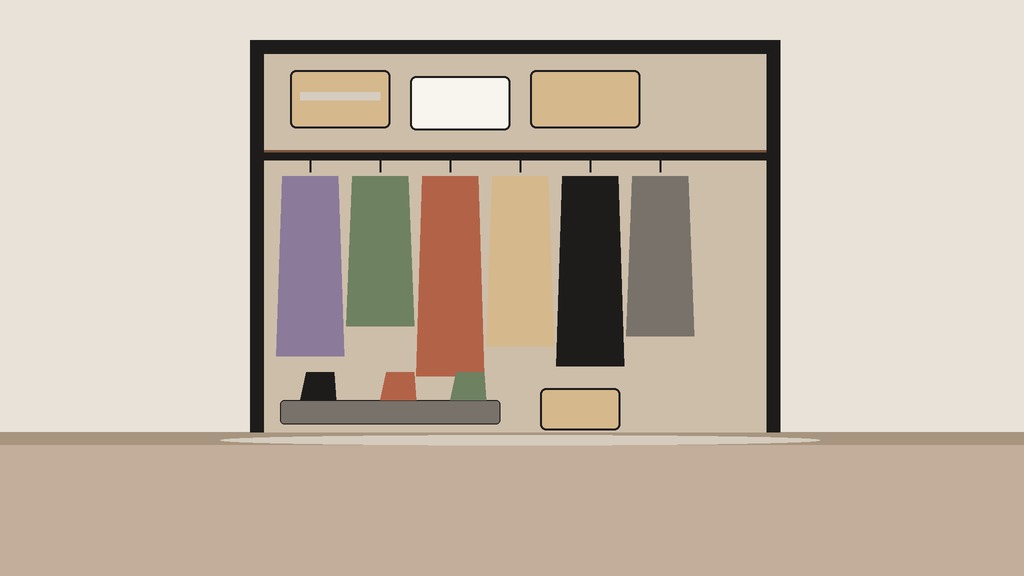
The coat closet is the first cupboard a visitor opens and an easy one to leave for last. By November it is holding every coat the household owns, a few it has outgrown, a bag of mitts, a broken umbrella and a pair of boots that appear to be there for good. Before winter arrives properly, a simple system turns it from a pile into a place where each person can find a coat quickly.
A coat closet works with a clear rod, a few bins and a spot for wet things, scaled to a small closet or a big household.
Look before you buy
The most useful tool is an empty closet.
- Take everything out, and put it on a bed or the floor.
- Wipe the shelf, the rod and the floor. Vacuum the corners.
- Check the space: the rod height, shelf depth, floor area and the door swing.
- Sort everything into groups: coats by person, accessories, bags, boots and miscellaneous.
You will see how much you actually have, and how much of it the closet can really hold.
Sort with four questions
Go through every coat and item, and ask these.
- Does it fit? A coat that is too small or too big stays in the closet and does not get worn.
- Is it in good shape? Check zippers, linings, buttons and seams. If a repair is simple, set a date to do it. If not, it goes.
- Do I wear it? A coat that has stayed on the hanger for two winters may not be worn again.
- Is it the right weight? One warm winter coat, one mid-season jacket and a rain shell cover most needs.
A guest or spare coat or two can stay. Give the rest a decision: keep, repair, donate or recycle.
What to do with the coats you remove
- Donate coats in good condition. Many communities run coat drives in the fall, and shelters and charities often need warm coats, mittens and boots. Ask what they accept, and make sure the items are clean.
- Pass on children’s coats to friends, a neighbourhood group or a swap.
- Recycle worn textiles where your municipality accepts them.
- Do not leave a donation at a closed door or outside a charity.
Step by step: the rod
The rod is the heart of the closet.
- Use matching hangers. Uniform hangers save space and make the row look orderly. Choose sturdy ones that will hold a heavy coat.
- Hang by person, or by type if one person owns most of the coats. Put the daily coats at the front and the occasional ones at the back.
- Hang only what is in season. Move summer jackets and the formal wool coat you wear twice a year to another closet or a bag on a high shelf.
- Leave a hand’s width between coats. A crammed rod makes coats wrinkled, and the one you need is the one you cannot pull out.
- Keep two or three hangers free for guests.
- Do not overload the rod. Check its weight limit.
The shelf and the floor
Above the rod and below the coats, there is a lot of unused space.
- Top shelf: labelled bins for seasonal things, such as spare hats and mitts, out-of-season gear and a few scarves. Keep heavier items lower, so nothing heavy falls on someone reaching up.
- A basket for mitts, hats and scarves, at a height everyone can reach. For a family, give each person their own basket or a labelled hook.
- A floor tray for wet boots, with a raised edge to catch meltwater and salt. Boots that are not daily wear can go in a bin.
- A small shoe rack, if there is room.
- A shelf for bags, or a hook on the inside of the door.
The inside of the door
The door is wasted space in most closets.
- An over-the-door rack or a row of hooks holds bags, scarves and umbrellas.
- A shallow pocket organizer keeps gloves and small items in sight.
- A small mirror is useful when you leave the house.
- A list on a card of what should be in the closet can help everyone put things back.
School gear and the extras
A household with children has more than coats.
- Give each child a hook or a bin at their own height, so they can hang and fetch things themselves.
- Keep a spare set of mitts, a hat and socks in a labelled bag, for the day something goes missing or gets wet.
- Put school bags on hooks rather than the floor, so the closet floor stays clear.
- Keep helmets, skates and gear in a bin on a lower shelf, or in a separate spot, so they do not fall.
- Check sizes at the start of winter, and pass on anything outgrown.
- Add name labels to coats, mitts and boots. A name on the tag helps a lost item find its way back.
Wet, salt and smell
A winter coat closet takes a beating.
- Dry coats before hanging them. A damp coat stays damp in a closed space, and may smell or grow mould. Hang wet coats on a hook or a rack outside the closet until dry.
- Dry mitts and hats on a rack or a line, not packed in a bin.
- Brush off salt and wipe boots before they go in. For white salt stains on floors, use a cleaner made for your flooring, follow its label and test a hidden spot first. For shoes, follow the care instructions for the material.
- Leave the door open for an hour now and then, to let the air circulate.
- Use a natural deodorizer, such as an open box of baking soda, if the closet smells damp.
Small closets and no closets
Many homes have a small closet or none.
- Use a freestanding rack or a row of hooks by the door.
- Keep fewer coats in the entry. One per person is plenty, and the rest go to a bedroom closet.
- Use a bench with storage for hats and mitts.
- Choose slim hangers to give more room on the rod.
Our guide to mudroom organization ideas shows how to build the same system on a wall of hooks, and our fall entryway guide, Less or More covers the look of the space.
Safety checks
- Keep the closet free of clutter at floor level, so no one trips.
- Do not store heavy items on a high shelf. A falling box is a hazard.
- Keep the closet away from heat sources, such as a furnace or hot-water tank, and leave clearance as the manufacturer’s instructions require.
- Do not use the closet to store flammable liquids, or anything that is not a coat or a related item.
- Check that the door opens and closes easily.
Less or More: the closet plan
| Less | More | |
|---|---|---|
| Coats on the rod | One per person, plus two spare | A full wardrobe by person |
| Accessories | One basket | A bin per person |
| Boots | A tray at the door | A tray and a rack |
| Time | One hour | An afternoon |
| Watch out for | A rod that is too full | Too many bins |
A habit that keeps it tidy
A coat closet stays orderly when it is checked regularly. The Home Command Center: Weekly Reset and Household Binder from Green Velvet includes a weekly reset checklist in a 10-item and a 25-item version, and a place for your own checklist, so a two-minute coat closet check can be one of the lines.
When to stop
The closet is organized when you can find any coat by reaching for it once, the wet things dry somewhere else and nothing is on the floor but the boot tray. For more on simple home systems, visit the Minimalism hub, or see our November declutter reset checklist.
Free checklist: Less or More?
Not sure which lane fits your room or closet? Our free 2-page printable walks you through a one-hour room reset and a weekend closet sort, with a Less column, a More column and a stop rule for each. We will email it to you, free.


Leave a Reply