Ad / Affiliate disclosure: This post contains affiliate links. If you buy through them, we may earn a commission at no extra cost to you. As an Amazon Associate I earn from qualifying purchases. AI note: This post was written with AI assistance and reviewed before publishing, and the featured image is AI-generated. Product notes come from each Amazon.ca listing; we have not tested these items ourselves. See our disclosure.
Not medical advice: This article is general educational information only, not medical, therapeutic or professional advice. Sensory needs vary from person to person; for health, autism or sensory processing concerns, talk to a qualified healthcare professional. Product picks are personal recommendations, not treatments.
The holidays can be a lot. Flashing lights, music in every shop, strong scents, crowded rooms and a pile of wrapped surprises. For autistic people, and for anyone who is sensory-sensitive, that mix can turn a happy season into an exhausting one.
A calm Christmas does not mean a smaller or sadder one. It means choosing what goes into the house on purpose. Here are gentle, practical ideas for families who want the season to feel good for everyone. For fabrics, weighted blankets and more, see our new Sensory-Friendly Home guide.
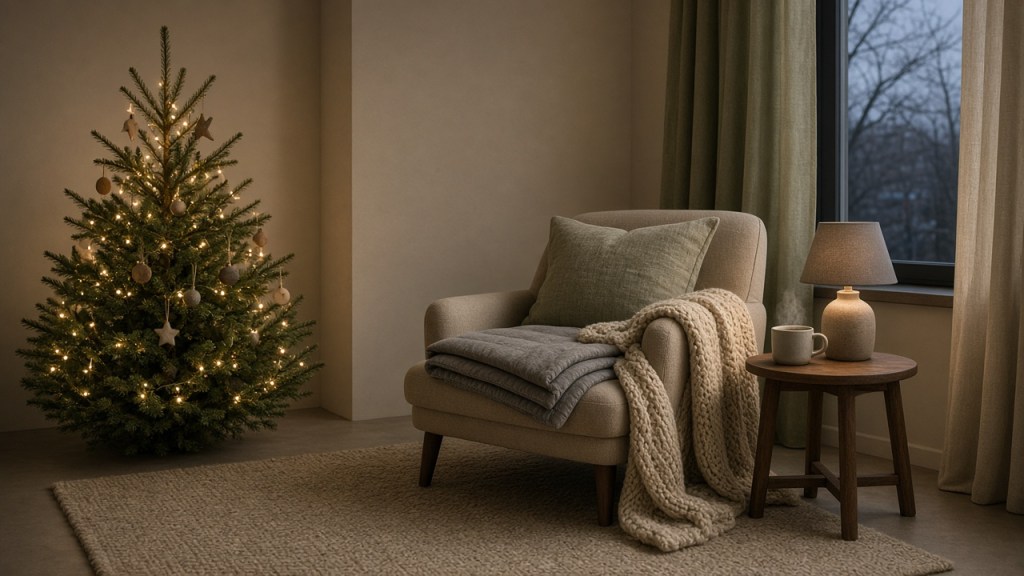
Start by asking
The most useful step costs nothing: ask the people you live with what feels good and what feels like too much. Some people love twinkling lights and hate carols; others are the reverse. Children and adults who do not use speech may show you through what they move toward or away from. Plan around real preferences, not assumptions.
Calm Christmas decor
- Pick one focal point. A tree or a mantel, not every surface. Clear surfaces give the eye somewhere to rest.
- Use a short, soft palette. Two or three muted colours look calm. Our Christmas colour palette guide shows how to choose one and stick with it.
- Choose matte and natural materials: wood, felt, paper and greenery reflect less light than glitter and mirrored baubles.
- Decorate in stages so changes to the home feel gradual, and keep a familiar space unchanged.
- For more simple ideas, see Minimalist Christmas Decor.
Lighting
Set Christmas lights to steady rather than flashing, chasing or twinkle modes; most sets have a mode button. Warm white is usually gentler than cool white or multicolour. In living spaces, turn off the big overhead light and use lamps with warm, dimmable bulbs instead. A soft glow in the window can be enough; our windowsill decor ideas show how.
Our pick: Linkind A19 Dimmable LED Bulbs, 2700K warm white. The listing describes 800-lumen, 2700K warm light bulbs with a standard E26 base. They need a dimmer switch or a lamp that supports dimming.
Sound
- Keep holiday music to one room, at low volume, or at set times.
- Turn off toys and decorations that sing, beep or talk unexpectedly.
- At gatherings, let guests know a quiet room is available.
- Offer hearing protection for parties, concerts and fireworks, and let each person decide when to wear it.
Our pick: Alpine Muffy Kids Earmuffs. The listing describes adjustable kids’ earmuffs, CE and ANSI certified, made with soft materials. Teens and adults may prefer the earplugs on our Sensory-Friendly Home page.
Scent
Pine, cinnamon, candles, plug-ins and perfume can stack up quickly. Choose one gentle scent or none at all. Real trees and baking can be enough on their own. If someone is sensitive, skip scented candles and sprays, open a window for a few minutes, and ask guests to go easy on fragrance.
Clutter and visual noise
Wrapping paper, boxes, extra dishes and new toys can fill a room in minutes. Keep a bin or bag ready for paper, put away boxes the same day, and give new things a home before bringing out more. Less to look at often means less to process.
Gift-giving without overwhelm
- Ask for a list or a “yes” category and respect it. A requested gift is not boring; it is kind.
- Consider skipping the surprise. Open gifts in a predictable order, or use easy-open bags instead of tape and paper.
- Spread opening out over the day, or across several days, instead of one big pile.
- Think about texture and comfort: a favourite fabric, soft socks or a familiar snack can be a perfect gift.
- For clutter-free ideas, see Gifts for People Who Don’t Want More Stuff.
Quiet spaces and breaks
Set up one quiet spot before the busiest days: a bedroom, a corner with a soft blanket and low light, or even a parked car for a few minutes away from a gathering. Make it okay to leave the room, skip a tradition or arrive late. Our calm-down corner tips cover what to put in one.
A gentle plan for the big day
- Share the plan ahead of time: who is coming, when, and what will happen.
- Keep familiar meals, routines and clothing where you can.
- Build in breaks before anyone needs them.
- Agree on a simple signal for “I need a break”, and honour it.
Want to go further? Our Sensory-Friendly Home guide covers fabric types from cotton to silk, seamless clothing, weighted blankets, lighting, sound and calm-down corners.
This guide shares general home and comfort ideas. It is not medical, therapeutic or professional advice. Every person’s sensory needs are different, so for health or safety questions, talk to a qualified professional who knows the person.
About the links in this post: the Amazon.ca links are affiliate links. We describe each item only by what its listing says, and we have not tested them ourselves. Prices and stock change often, so check the current price and listing before you buy.

